
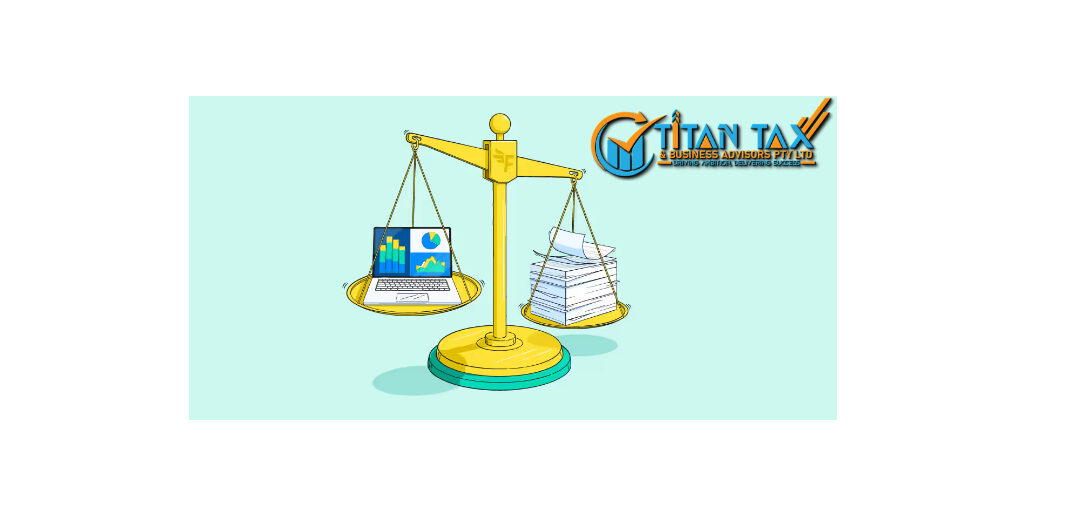
Spreadsheets vs Accounting Software: Why Businesses Are Switching in 2026
For many years, spreadsheets have been the foundation of financial management for businesses. While they can track income, manage expenses, and organise financial data, they are no longer sufficient for growing businesses.
As operations expand, spreadsheets often become a risk rather than a reliable tool. Modern businesses require accuracy, compliance, data security, and real-time financial visibility—something spreadsheets were never designed to provide.
That’s why more businesses are switching to accounting software like Xero to manage their finances efficiently and scale with confidence.
In this guide, TitanTax explains why this shift is happening and how your business can benefit.
Why the Right Financial System Matters
A financial system should do more than basic bookkeeping—it should support growth, planning, and decision-making.
Key benefits of a strong financial system:
- Accurate data for better decisions: Reliable numbers support strategic planning
- Compliance protection: Reduces risk of penalties and reporting errors
- Cash flow visibility: Real-time insights improve financial control
- Operational efficiency: Automation reduces manual workload
- Scalability: Systems grow with your business
When financial data is delayed or inaccurate, businesses are forced to make reactive decisions—leading to missed opportunities and increased risk.
Why Many Businesses Start with Spreadsheets
Spreadsheets are often the starting point for small businesses due to their simplicity.
Common reasons include:
- Low or no cost
- Easy to use
- Flexible for basic tracking
- Quick to set up
- Suitable for low transaction volumes
However, as soon as a business grows, these advantages quickly turn into limitations.
The Risks of Spreadsheet-Based Accounting
Spreadsheets are powerful tools—but not accounting systems.
Key risks include:
- Manual errors: Incorrect formulas or data entry mistakes
- Lack of controls: No built-in accounting rules or validations
- No audit trail: Changes are difficult to track
- Compliance risks: Not designed for tax, payroll, or reporting requirements
- Version control issues: Multiple files create confusion
- Limited scalability: Becomes complex as transactions increase
As your business grows, these risks can lead to serious financial and compliance issues.
Spreadsheets vs Accounting Software
| Feature | Spreadsheets | Accounting Software |
|---|---|---|
| Data Entry | Manual, error-prone | Automated and efficient |
| Accuracy | High risk of mistakes | Built-in validation |
| Scalability | Limited | Designed for growth |
| Reporting | Manual | Real-time automated reports |
| Security | Weak | Secure cloud-based systems |
| Collaboration | Limited | Multi-user access |
| Automation | None | Full automation |
| Compliance | Manual tracking | Built-in compliance |
| Integration | Limited | Connects with other systems |
| Visibility | Delayed insights | Real-time financial data |
Benefits of Moving to Accounting Software
Switching to accounting software creates a structured and reliable financial system.
1. Automation Improves Efficiency
Tasks like invoicing, payroll, reconciliation, and reporting are automated, saving time and reducing errors.
2. Built-In Compliance
Accounting systems help manage:
- GST
- BAS reporting
- Payroll compliance
- Record-keeping requirements
This supports compliance with the Australian Taxation Office.
3. Improved Financial Accuracy
Features like double-entry accounting and validation checks ensure reliable data.
4. Real-Time Financial Insights
Access live data on:
- Cash flow
- Profitability
- Outstanding invoices
- Liabilities
5. Standardised Reporting
Generate consistent and accurate financial reports instantly.
6. Strong Data Security
Modern platforms offer:
- Secure cloud storage
- Access controls
- Data encryption
- Automated backups
When Should You Move Beyond Spreadsheets?
You should consider upgrading when:
- Transaction volumes increase
- Compliance requirements become complex
- Cash flow visibility is unclear
- Reports take too long to prepare
- Data inconsistencies appear
- Admin workload becomes overwhelming
These are clear signs your business needs a more advanced financial system.
How to Transition from Spreadsheets to Accounting Software
A structured approach ensures a smooth transition.
Step 1: Review Current Processes
Understand how your financial data is currently managed.
Step 2: Define Business Needs
Consider reporting, compliance, payroll, and integration requirements.
Step 3: Clean Your Data
Organise and prepare your existing financial records.
Step 4: Set Up the System
Configure chart of accounts, permissions, and compliance settings.
Step 5: Migrate Data
Transfer historical data securely and accurately.
Step 6: Train Your Team
Ensure everyone understands how to use the system.
Step 7: Implement Processes
Create workflows for invoicing, payroll, reporting, and compliance.
💡 TitanTax Tip: With the right support, transitioning can be simple and stress-free.
Overcoming Common Concerns
Many small business owners have some concerns about switching to accounting softwares from spreadsheets. Some of these concerns are
1. Cost fears often ignore long-term savings: While accounting software involves investment, it reduces long-term costs by lowering error risk, saving time, and improving efficiency.
2. Learning concerns underestimate system usability: Modern systems are designed to be user-friendly, and structured training makes the transition manageable.
3. Migration fears overestimate disruption: With proper planning, data migration can be secure and accurate.
4. Comfort with familiarity delays progress: Familiar tools feel safe, but familiarity should not be confused with effectiveness.
Measuring Success After Switching
Businesses typically see:
- Improved accuracy strengthens trust: Reliable data supports confident decision-making.
- Faster reporting improves responsiveness: Timely information enables proactive management.
- Better cash flow visibility increases stability: Financial clarity supports planning.
- Reduced compliance risk protects the business: Regulatory alignment lowers exposure.
- Lower admin workload improves productivity: Automation frees operational capacity.
- Stronger planning capability supports growth: Strategic insight enables scalability.
A Smarter Way to Manage Business Finances
Spreadsheets may work in the early stages of a business, but they were never designed to support long-term growth, financial control, and operational stability. As businesses evolve, they need systems that provide structure, accuracy, automation, security, and real-time financial visibility. Accounting software delivers the foundation modern businesses need to operate efficiently and make confident financial decisions.
Replacing spreadsheets is not just a system upgrade, it’s a strategic move toward better financial management, lower risk, and stronger business performance. With the right setup, guidance, and structure, the transition becomes a positive step forward, helping businesses build a more stable, scalable, and resilient financial future.
Frequently Asked Questions
What are the risks of using spreadsheets for accounting?
Spreadsheets are prone to human errors, such as incorrect formulas or manual data entry mistakes. They lack audit trails, proper financial controls, and real-time reporting, making them unreliable as businesses grow. Version control and scalability issues can also lead to confusion and operational risk.
When should a business switch to accounting software?
A business should consider upgrading when transaction volumes increase, reporting becomes complex, or real-time financial visibility is needed. If spreadsheets cause delays, inconsistencies, or limit multi-user collaboration, it’s a clear sign that accounting software is needed.
Is it expensive to switch?
While accounting software involves an initial investment, it often saves time, reduces errors, and improves efficiency, making it cost-effective in the long run. Platforms like Xero accounting software are scalable and provide features that can offset costs by reducing manual work and operational risk.
Is training required?
Yes, but most modern accounting systems are user-friendly and designed for quick adoption. Structured training ensures that staff understand workflows, data entry, reporting, and compliance features, making the transition smooth and effective.
How do I choose the right accounting software?
Assess your business needs, including transaction volume, reporting requirements, multi-user access, payroll needs, and integration with other tools. Platforms like Xero accounting software are popular because they combine scalability, automation, and real-time financial visibility suitable for small and growing businesses.
Get Expert Help with TitanTax
At TitanTax, we help businesses:
- Transition from spreadsheets to modern accounting systems
- Set up software like Xero correctly
- Ensure compliance and reporting accuracy
- Improve financial visibility and control
👉 Contact TitanTax today and take the next step toward smarter financial management.
Disclaimer
The information provided in this article is for general informational purposes only and does not constitute financial, taxation, or legal advice. TitanTax is not licensed to provide financial product advice.
Before making financial decisions, consider your individual circumstances and seek advice from a qualified professional.

